Open-plan offices were designed for collaboration. But without considered acoustic zoning, they can just as easily undermine it — leaving employees to seek out pockets of privacy in spaces never designed to provide it.
Gensler’s 2026 workplace survey found that two-thirds of employees actively change their environments to suit their needs, from moving furniture, adjusting lighting, to creating hubs of privacy where there is none. With the majority of employees still spending time in the office, it is clear that the issue is not the space itself, but rather the performance.
This is where acoustic zoning can go beyond sound control and reshape how interior spaces are planned. Instead of treating acoustics as an afterthought or relying on meeting rooms and phone booths to reduce noise, acoustic zoning integrates sound control into the built environment.
Solutions such as Zintra’s PET acoustic panels and acoustic baffles made from 100% recyclable materials deliver outstanding acoustic performance without compromising design aesthetics.
Here is how acoustic zoning could be the answer to creating an acoustically comfortable environment during an office retrofit without requiring a full renovation.
The Acoustic Limitations of Open-Plan Environments
While open-plan environments suit the modern workplace, they pose challenges for noise control.
Sound Propagation Across Large Spaces
Without sound-absorbing materials, sound waves are free to travel across open spaces, bouncing off hard surfaces and reflecting them into the space. This turns open plan offices into an echoing chamber, with conversations, phone calls and background noise increasing stress and disrupting focus and productivity.
Reflective Architectural Materials
Modern office design often integrates polished concrete and glass, and high, exposed ceilings - all of which have hard, reflective surfaces that spread noise further. Although they are visually appealing, if not properly integrated alongside sound-absorbing materials, they can lead to higher noise levels and reverberation.
Limited Acoustic Differentiation
Because modern workspaces have shifted to flexible environments where multiple tasks – such as focused work, informal catch-ups and collaborative meetings - happen throughout the day, open plan offices need to be acoustically diverse to support different modes of work.


What Is Acoustic Zoning in Interior Design?
Acoustic zoning is one of the most effective acoustic solutions for open-plan offices. This is because it separates open-plan environments into distinctive zones without having to close off the space.
Rather than building new meeting rooms or dedicated video conferencing spaces for an office retrofit, interior designers and architects can shape how sound moves by integrating:
Spatial layouts
Wall-mounted acoustic panels
Freestanding sound-absorbing materials
These solutions, such as Zintra’s acoustic ceiling clouds and panels, help to provide distinct zones to suit each activity – quiet zones, collaborative spaces or social hubs.
Architectural Strategies for Effective Acoustic Zoning
Activity-Based Spatial Planning
Addressing acoustic performance in an open-plan workspace starts with the layout. Architects and designers alike should begin by grouping noise-level activities and routing circulation paths around them to create noise-control barriers between zones.
Wall-Mounted Acoustic Panels
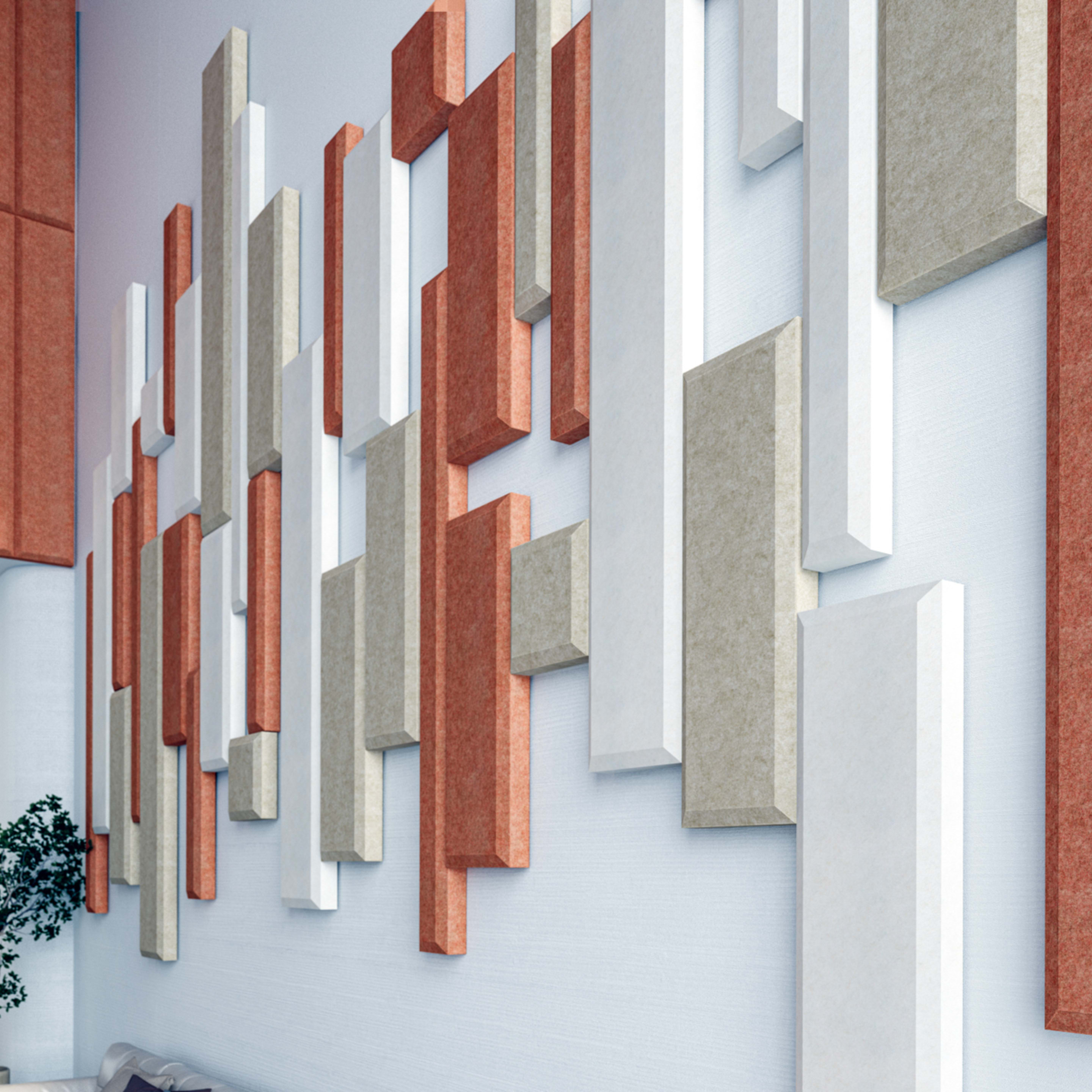
Wall-mounted acoustic panels offer direct absorption for zoning quiet and collaborative spaces. Depending on the required level of performance, materials vary in how much sound they absorb. This is measured by the Noise Reduction Coefficient (NRC), which can also be influenced by how the panels are mounted:
Direct mount: ~0.45 NRC
With 50 mm air gap: up to ~0.85 NRC
With 152 mm air gap: ~0.90+ NRC
Zintra’s acoustic solutions for open-plan offices can be specified according to the specific performance needs, ensuring acoustic comfort across workspaces.
Ceiling-Based Acoustic Absorption
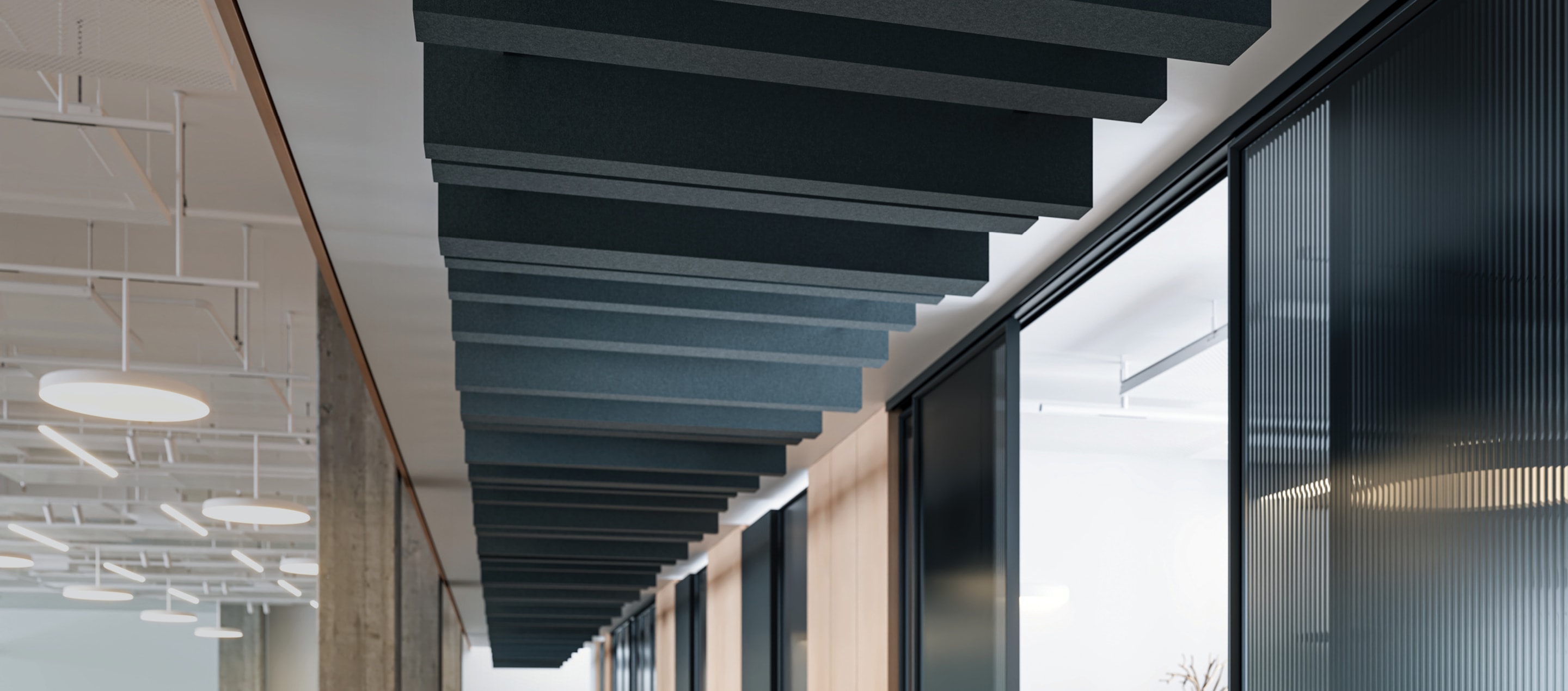
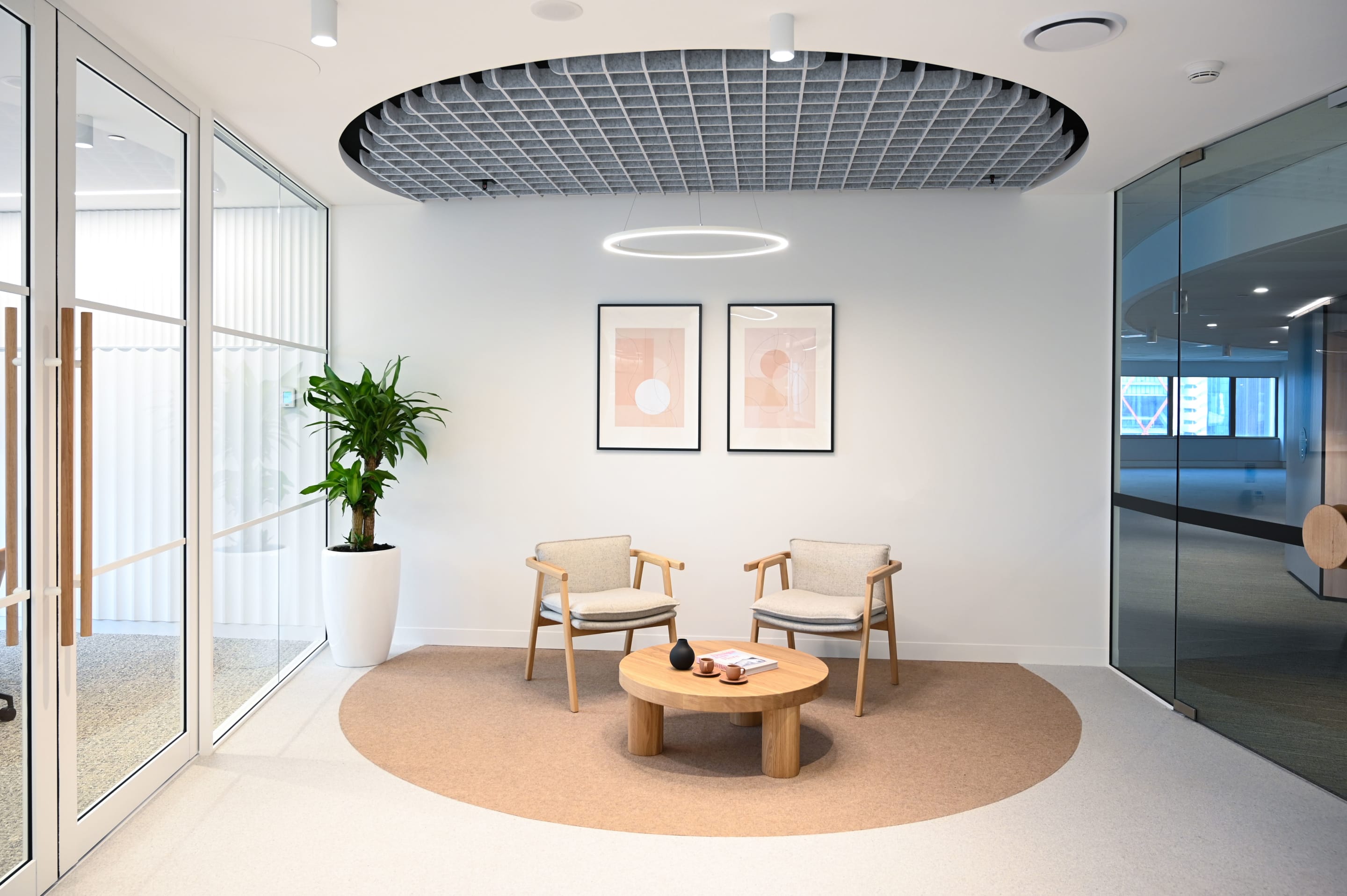
Ceiling acoustic solutions are one of the most effective ways to control noise and offer a large continuous area for reducing noise. Systems such as acoustic baffles, acoustic ceiling beams and acoustic ceiling clouds absorb sound reflections and help reduce reverberation across open spaces.
With NRC values up to 1.5, Zintra’s ceiling acoustic designs act as sound absorbers across a wide frequency range – reducing noise, improving communication and supporting acoustic comfort. The architectural design of Zintra’s solutions also helps hide HVAC systems, supporting the overall look and feel of a space.
Material Composition and Sustainability
Materials also greatly influence the acoustic performance and sustainability of a project. Zintra’s acoustic solutions are made from 100% recyclable PET, including materials such as:
60% post-consumer recycled PET bottles
35% pre-consumer recycled PET chips
5% polylactic acid (PLA)
Available in a wide selection of architectural designs, acoustic panels range between 12mm and 24mm thick and meet ASTM-E84 Class A fire ratings standards.
The Aesthetic Evolution of Acoustic Materials
What was once considered a technical requirement for sound control, acoustic panels are no longer just performing as functional elements. Instead, there has been an aesthetic evolution with acoustic panels now viewed as being core to the architectural language of a space. These modern acoustic solutions define zones, create spatial identity and focus points throughout both open plan offices and ceilings.
Zintra’s selection of acoustic panels has been designed with both performance and aesthetics in mind, enabling:
Sculptural ceiling beams
Patterned acoustic tiles and walls
Textured finishes and feature wall solutions
Artistic applications, such as Box Tiles Emerald, deliver both acoustic performance and visual aesthetics
With acoustics being an integral part of WELL building standards, combining acoustic design with acoustic performance is an essential part of wellbeing in open-plan offices.

Designing Open Spaces That Sound as Good as They Look
Acoustic zoning reframes what open-plan design can achieve — not just how a space looks, but how it performs for the people working in it every day.
By shaping how sound moves through a space, designers and architects can create distinct zones that support focus, collaboration and connection — without closing off the environment or undertaking a full renovation.
Integrating Zintra’s systems, such as ceiling beams, wall-mounted acoustic panels and integrated acoustic tiles makes that possible - delivering high-performance acoustic comfort while complementing the visual aesthetics of the space.
The result is a workplace that doesn't ask employees to choose between collaboration and concentration. It's designed to support both.
Discover Zintra’s selection of architectural acoustic solutions for your next project.